
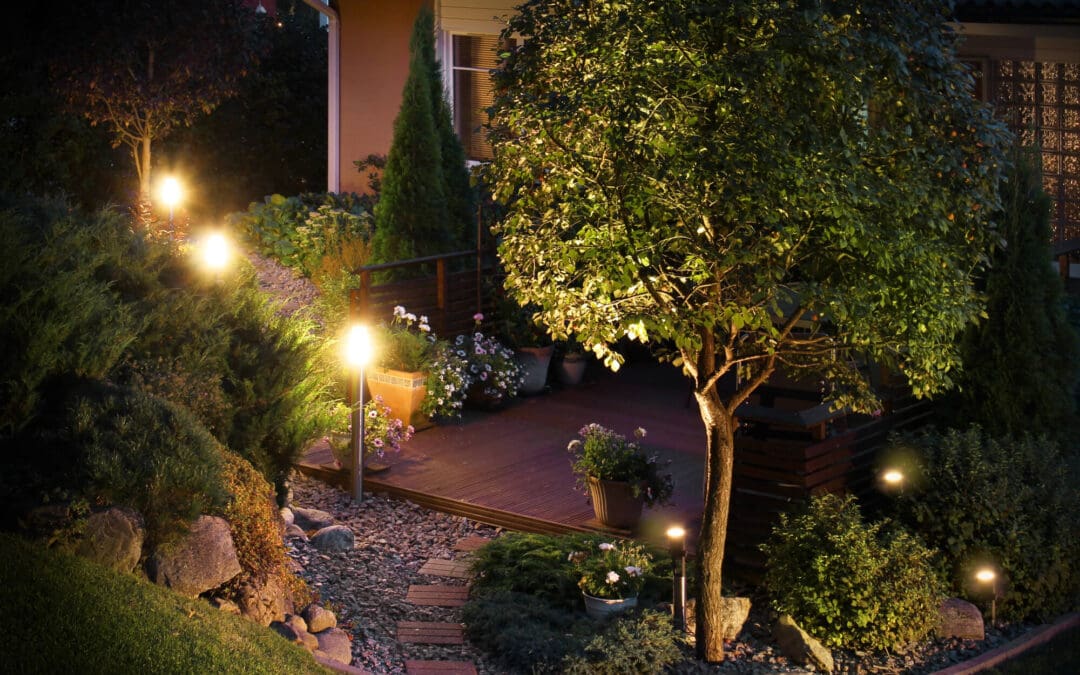
A well-planned landscape lighting system changes how a property reads after sunset, extends the functional hours of outdoor spaces, improves safety at entry points and pathways, and creates a nighttime identity for the home that daytime landscaping alone can’t produce. Understanding how to plan before purchasing a single fixture is what separates an outdoor lighting system that works from one that simply consumes electricity.
How to Plan Landscape Lighting That Works for Your Property
Before selecting fixtures or determining placement, the first question is what the lighting is meant to accomplish. Landscape lighting serves distinct purposes: safety and wayfinding lighting that guides people along paths and steps, security lighting that deters unwanted access, accent lighting that highlights architectural features and plantings, and ambient lighting that creates atmosphere in outdoor living areas. Mapping the property and identifying the zones and features that fall into each category is the planning exercise that produces lighting design rather than a fixture collection.
Landscape Lighting Techniques That Create Depth and Visual Interest
The landscape lighting techniques that produce the most compelling nighttime results create depth, using light direction and contrast to make the property feel three-dimensional after dark rather than flat and uniformly illuminated. Uplighting, fixtures at ground level directed upward toward trees or architectural features, is the technique with the most dramatic visual impact. A single well-placed uplight at the base of a mature tree creates a canopy of illuminated branches that defines the nighttime character of the yard. Downlighting from elevated positions in trees or on structures mimics natural moonlight and creates the soft, dappled effect that makes outdoor spaces feel habitable. Path lighting that provides just enough illumination to guide movement without flooding the landscape with flat brightness keeps the focus on the features rather than the fixtures. Avoiding over-illumination is as important as achieving adequate illumination, a lighting plan that lights everything equally produces no visual hierarchy, no depth, and no sense of design.
Fixture Selection and Technology
LED technology has transformed lighting in ways that make earlier halogen fixture generations obsolete for most residential applications. LED fixtures use a fraction of the energy, produce less heat, carry longer rated service lives, and are available in a range of color temperatures. Color temperature is measured in Kelvin, lower numbers produce warmer, more amber light that complements natural wood tones and stone; higher numbers produce cooler light that works better with modern architecture. Most residential landscape lighting benefits from the 2700K to 3000K range, warm enough to feel inviting without the yellow cast of very low Kelvin sources. Fixtures rated for wet locations with durable housing materials are worth the additional investment over budget alternatives that deteriorate within a few seasons of UV exposure, moisture, and temperature cycling.
Frequently Asked Questions (FAQs)
How many landscape lighting fixtures do I need?
The number depends on the size of the property, the features worth illuminating, and the purposes the system serves. A common mistake is under-buying initially and adding more in a piecemeal way that produces an incoherent result. Planning the full system on paper first and purchasing for the complete plan produces a more coherent and cost-effective outcome than a starter version that gets added to incrementally.
Should I hire a professional or install lighting myself?
Low-voltage lighting systems are within DIY capability for most homeowners. They connect to a transformer plugged into a standard outdoor outlet, and low-voltage wiring doesn’t require permits or licensed electrical work. Line-voltage landscape lighting operating at 120 volts requires a licensed electrician. Projects with complex zone requirements, smart home integration, or significant tree lighting that requires elevated fixture placement benefit most from professional involvement.
What is the best color temperature for landscape lighting?
For most residential applications, the 2700K to 3000K range produces the warmest, most inviting result, particularly for traditional architecture, natural wood, and stone surfaces. Modern properties with cooler material palettes can work effectively at 3000K to 4000K. Mixing color temperatures creates visual discord that most homeowners notice even when they can’t identify the cause; consistency across all fixtures produces the most cohesive result.
How do I avoid over-lighting my landscape?
Restraint in fixture count and lumens, combined with intentionality in placement, prevents over-illumination. Lighting every planting and pathway section equally produces a landscape that reads like a parking lot. Identifying the three to five most significant features worth highlighting and building the plan around those focal points produces visual hierarchy and depth.
How do I maintain landscape lighting fixtures?
LED fixtures require significantly less maintenance than halogen predecessors. Seasonal maintenance includes cleaning fixture lenses that reduce light output, adjusting fixture aim that has shifted through ground movement or plant growth, checking transformer connections and timer settings, and inspecting wiring for damage from lawn maintenance equipment.
House2Home Inspection Services provides home inspection services to customers in Hillsborough, Pasco, Pinellas, Manatee, Hernando, and Polk counties. Contact us to request an appointment.